
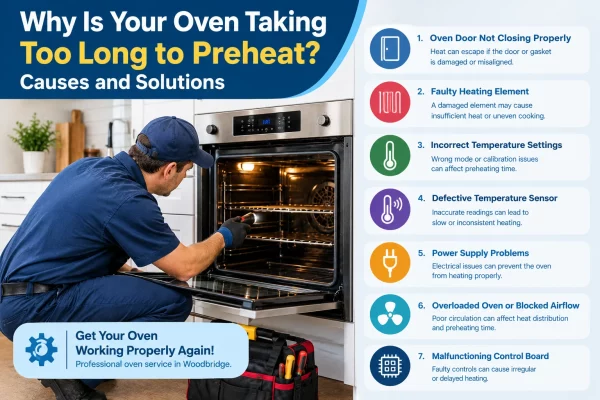
An oven is an essential kitchen appliance that helps homeowners prepare meals, bake desserts, and cook food conveniently. However, when an oven takes too long to preheat, it can disrupt meal preparation and make cooking less efficient. Sometimes, the issue is caused by a simple setting or an overloaded oven, while other situations may indicate a faulty component.
Understanding the common reasons behind slow preheating can help homeowners identify possible solutions and determine when professional assistance is needed. If the problem continues, reliable oven service Woodbridge can help identify the underlying issue and restore your appliance’s performance.
1. The Oven Door Is Not Closing Properly
An oven needs to retain heat to reach the selected temperature efficiently. If the door does not close completely, warm air can escape, making preheating take longer than usual.
A damaged door gasket, loose hinge, or obstruction around the door may contribute to this problem.
Possible solutions:
- Check whether the oven door closes completely.
- Inspect the visible door gasket for cracks or damage when the oven is cool.
- Remove food debris around the door seal.
- Avoid forcing the door shut if it appears misaligned.
If the door remains loose or the seal is damaged, a qualified technician can inspect the hinges and gasket.
2. A Faulty Heating Element
Electric ovens rely on heating elements to generate the heat needed for cooking. If a bake or broil element is damaged, the oven may take longer to reach the desired temperature or struggle to heat evenly.
You may also notice undercooked food, inconsistent baking results, or an element with visible signs of damage.
What you can do:
- Check for visible damage after switching off the oven and allowing it to cool completely.
- Review whether the oven performs differently across its available cooking modes.
- Consult the owner’s manual if the appliance displays an error code.
Do not touch the heating elements or attempt electrical testing yourself. If you suspect a defective component, arrange a professional inspection.
3. Incorrect Temperature Settings
Sometimes, the oven may appear slow because its settings are not configured as expected. A selected cooking mode, temperature calibration issue, or misunderstanding of the preheating indicator can affect how you interpret the oven’s performance.
Try these steps:
- Confirm that the desired temperature has been selected.
- Check whether the oven is set to bake, convection bake, or another mode.
- Allow the preheating cycle to finish before placing food inside, unless your recipe says otherwise.
- Review the manufacturer’s instructions for the preheat indicator.
If the oven consistently takes much longer than expected, the problem may require further diagnosis.
4. A Defective Temperature Sensor
The temperature sensor monitors the oven’s internal temperature and helps the control system regulate heating. If the sensor provides inaccurate readings, the oven may heat incorrectly or fail to reach the expected temperature.
Common warning signs include inconsistent cooking results, temperature fluctuations, and longer-than-usual preheating cycles.
A technician can test the sensor and related controls to determine whether a replacement is necessary. Temperature calibration may help with minor temperature offsets, but it will not fix a defective sensor.
5. Problems With the Oven’s Power Supply
Electric ovens require an appropriate electrical supply to operate correctly. If there is an electrical problem, the appliance may not heat as expected.
Possible causes include a tripped circuit breaker, an electrical connection issue, or a fault within the oven’s internal components.
Important safety tips:
- Check the circuit breaker for a visibly tripped switch, provided it is safe to access.
- Do not remove electrical panels or inspect internal wiring.
- Stop using the oven if you notice sparks, a burning electrical smell, or repeated breaker trips.
- Contact a qualified technician or electrician, depending on the suspected issue.
Never repeatedly reset a breaker that continues to trip.
6. The Oven Is Overloaded or Has Blocked Airflow
Although the oven cavity is designed to hold cookware, overcrowding can interfere with airflow and heat distribution. Large pans placed too close together may also contribute to inconsistent cooking.
This issue is particularly noticeable when several dishes are prepared simultaneously.
Possible solutions:
- Leave adequate space around cookware.
- Avoid covering vents inside the oven.
- Use the recommended rack positions.
- Follow the manufacturer’s instructions for convection cooking.
Overcrowding may not be the reason for a genuinely slow empty-oven preheat, so persistent delays should be investigated separately.
7. The Oven Control Board Is Malfunctioning
The electronic control board manages several oven functions, including heating cycles and temperature regulation. If the board or a related control component malfunctions, the oven may heat inconsistently or fail to complete preheating normally.
You may notice error messages, unexpected shutdowns, or heating problems that occur repeatedly.
Because control board issues can resemble sensor or heating element failures, proper testing is important before replacing parts. A professional technician can diagnose the fault and recommend an appropriate repair.
When Should You Call a Professional?
Some preheating delays can be resolved by checking the settings, door seal, and cooking arrangement. However, persistent problems may indicate an electrical or mechanical fault.
Consider contacting an appliance repair professional if:
- The oven consistently takes much longer to preheat than it used to.
- The appliance never reaches the selected temperature.
- Food remains undercooked even when the recommended cooking time is followed.
- Error codes appear repeatedly.
- The oven shuts off unexpectedly.
- You notice electrical smells, sparks, or repeated circuit breaker trips.
Professional diagnosis can help identify the actual cause and prevent unnecessary replacement of working components. Homeowners looking for oven service Woodbridge should seek qualified assistance when basic troubleshooting does not resolve the issue.
How to Prevent Oven Preheating Problems
Regular care can help keep an oven working efficiently and make it easier to recognize developing problems.
- Clean spills and residue according to the manufacturer’s instructions.
- Keep the door seal clean and check it periodically.
- Avoid blocking internal vents.
- Use the recommended rack positions and cooking modes.
- Follow the manufacturer’s maintenance guidelines.
- Address unusual noises, error codes, and temperature changes promptly.
Routine maintenance cannot prevent every component failure, but it can help maintain reliable operation.
Final Thoughts
An oven that takes too long to preheat may have a simple setting issue, a damaged door seal, a defective heating element, a faulty temperature sensor, or a more complex electrical problem. Checking the basic settings and visible components can help narrow down the possibilities.
If your oven continues to heat slowly or fails to reach the selected temperature, professional diagnosis is the safest way to identify the cause. Timely repairs can help restore consistent performance and make everyday cooking more convenient.